
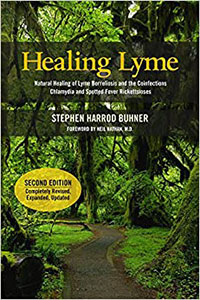
On page 77 of Healing Lyme, you say: “…in my opinion, the best outcomes will occur with the use of encapsulated or tablet-form whole herbs rather than tinctures. I do have a bias toward whole herbs for most conditions. In any event, andrographis should not be used as a tincture—it is much too bitter. If you do use tinctures, the dosage range should EQUAL that for the whole or standardized herbs outlined below.”
For the example you gave of smilax and red root tinctures, I would use smilax in that dose. For red root I prefer tinctures and that is the dosage range I prefer as well.
I hate this kind of response that the herbalist gave you; they always say that and did when I asked the questions 20 years ago. Useless information and noone pays attention to viscosity, dropper size, etc. anyway. Still, because I focused on tablets, I never did do any kind of tincture conversion. Conversions can be done but they take time and as I am on sabbatical for the next year, I am refraining for now and besides, as I mentioned in previous responses and in my book, for the Core Protocol I like the whole herbs better.
So what I can give you would be a guesstimate based on larger dose ranges with other herbs I have used.
I would begin with 1 tsp 3x daily and increase that to 4x daily. If you take these on an empty stomach, with or without water, they will go into the system pretty quickly and so I would suggest monitoring your responses carefully to see how you respond. If taken without water they will go into the blood stream without any passage through the stomach. Also, less of the buffering agents present in the whole herb will be present so I would expect the andrographis to be stronger in its impacts.
Tinctures will almost always be more expensive than the whole herb. This is especially true in long term complex chronic conditions and onset acute conditions.

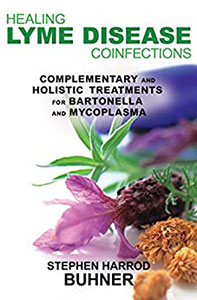


In your protocol for Bartonella, it says: Milk Thistle seed, standardized, 1200 mg daily All for 30 days. I ordered the tincture from woodland, and I have no idea how to dose a tincture to 1200mg, i ordered a 4oz from them, what would be the correct dosage? and should i order it in pill form next time from somewhere else?
Hi Courtney- I’ve had similar questions about how the dosage works with the tinctures. It’s confusing! My doctor gave me something that’s helpful for figuring that info out. On the back of the tincture bottle there should be a ratio listed (under the ingredients). If the tincture has a 1:1 ratio, it’s equivalent to 1 gram or 1,000 mg per 20 drops. If it’s a 1:2 ratio it’s .5 grams or 500mg per 20 drops. 1:4 ratio = .25 grams or 250mg per 20 drops, 1:5 ratio = .2 grams or 200mg per 20 drops. 1:6= .16 or 160mg per 20 drops. 2:1 ratio= 2 grams or 2000mg per 20 drops. I’m not sure what the ratio is for Woodland Essence’s Milk Thistle, but this should help you be able to figure out how many drops you need to get 1200mg. All the best to you!
I believe this general approach is true and helpful.
However I think the topic is somewhat complex because the body has a variable ability to digest and absorb the different chemicals in plants dependent on the chemical itself and its solubility in bile etc.
A similar thing is also happening in alcohol and water solution tinctures ability to dissolve out the active constituents.
In practice there is no direct equivalence calculation we can use.
However if you start as outlined above and then compare dosages of whole herb and tincture from reliable sources such as Stephen Buhner and others you should be able to get a fair idea.
Remember the herb itself will often vary in potency considerably and each persons response often varies even more so this is only ever going to be a guide.
I typically find the recommended range from rebounded herbalists like Buhner. And start at 50% of the middle of that range( e.g. If the range is 30 to 50 drops I start at 50% of the middle of that. So 20 drops. For a week ) to see how my body responds.
Then adjust from there.
Standardised preparations are something different.
Here the manufacturer has ensured that each measure of product has a known proportion of a selected active ingredient.
There is usually some basis for which chemical they choose to use for standardisation but we don’t have a great record on that.
In any case the standardised product should / must list on its label the concentration. E.g. 100mg per 1g or 10%.
Dosage can therefore be calculated relatively easily.